Tuesday, February 16, 2016

Real life superheroes: from fiction to reality

Authored by MHS student Ivin Mckinney
As a child, if there was one thing I loved doing, it was pretending to be a superhero. I would pretend I could fly, use super strength, run at super speed, or even shoot lasers out of my eyes. I would pretend that I could save the world.
However, for some people it is not pretend. They may not be saving the world from evil villains, but they are surely gifted. The U.S. military is building super suits to use in war. A man named Daniel Kish is able to see despite his blindness. A contortionist made the best of his disorder by joining a circus and later became a celebrity.
In the Marvel Comics universe, Tony Stark, the owner of a huge weapon industry called “Stark Industries,” is Iron Man. He wears a metal suit that allows the wearer to fly, shoot rockets, shoot lasers, and gives the wearer superhuman strength. While this suit started off as fiction, it is now becoming a reality.
The TALOS suit in action.
According to Jeremy Bender, Iron Man’s suit and the ‘Tactical Assault Light Operator Suit’, built by the U.S. military, have a lot in common. While wearing this exoskeleton, humans can lift over 400 pounds (the strength of 2-3 people), and It allows the wearers to sprint at speeds of 10mph with little input by the wearer. These suits also have built in sensors that monitor the wearer's heart rate and body temperature. Other models of the TALOS have a liquid armor that solidifies when hit by bullets.
Additionally, the superhero Daredevil from the Marvel Comics universe had his eyes burnt by acid as a child.  He then discovered that he possessed the ability to see with sound and later becomes a crime fighter of Hell’s Kitchen. And as was the case with the Iron man suit, while most people wouldn't expect it, the ability to see sound is actually possible.
According to Michael Finkel, Daniel Kish was born in 1966 with a very aggressive form of cancer called retinoblastoma, a fatal disease that attacks the retinas. When he was 13 months old, he had to have both of his eyes removed. Yet Kish, now in his 40s with prosthetic eyeballs, is able to get around just like any normal guy. He is able to climb mountains, climb trees, swim, and ride his bike through traffic filled streets. As a blind man, he can do all these activities because at a young age he realized he can see sound waves.
Daniel uses a form of echolocation to see with a clicking sound he makes with his tongue. As a kid, he would stand on his porch and visualize each tone and what they mean. Echolocation is the technique that bats and dolphins commonly use.
A diagram of echolocation from ASU School of Life Science
When Daniel clicks his tongue, the noise sends sound waves to bounce to and from himself, and objects around him. Once he hears the sound waves he is able to determine where the objects are. He named this technique Flash Sonar.
Daniel is passing on his gift by teaching other blind people the technique of ‘Flash Sonar’. Additionally,
Lutz Wiegrebe, a neurobiologist at the Ludwig Maximilian University in Munich, Germany, found that with three weeks of training, anyone - blind or otherwise - can learn Flash Sonar.
Also from the Marvel universe, Mr Fantastic, while in space, was hit by a “cosmic ray,” according to the original comic by Stan Lee. Everyone on the ship developed superhuman abilities; Mr. Fantastic gained the power to stretch himself like rubber. He can, for example, ball himself up, twist his body, and fit inside of objects much smaller than himself. In Fantastic Four issue #28 by Stan Lee, Mr. Fantastic turns himself into a ball and hurls himself at the X-Man Cyclops to tackle him. While this may seem like a stretch, his powers are more possible than you may imagine.
Fantastic Four issue #28
Daniel Browning, a contortionist, can stretch his body like rubber, twisting himself into a variety of weird shapes. According to Jon Meyersohn and Kimberly Launier, he can dislocate his legs and arms, and his ribs can poke out of his chest. He can also turn his torso to 180 degrees without pain.
 
Daniel can perform these acts because he has a very rare disorder known as Ehlers-Danlos syndrome (EDS). EDS is a disorder that causes extreme elasticity of the skin, joints, and blood vessels. Only one in every 1,000 people have EDS (Meyersohn). However, he is not suffering. He doesn’t usually feel any pain except for some rare, minor muscle pains. Daniel is actually making the best of this condition.
Daniel Browning... in a ball
At the age of 17, he ran off and joined a circus team. He also has performed at many concerts, trade shows, and colleges, doing tricks like twisting himself and fitting into areas twice as small as himself. Daniel has mastered all these tricks so well that people began calling him ‘Rubberboy.’
His superhero-like ability has been responsible for him traveling around the globe and seeing very amazing people and places. He is currently the host of the show “Superhuman” owned by Marvel founder Stan Lee.
There is a fine line between fiction and reality. These people have brought both of those worlds together and made something amazing. They may not be saving the world, but all have something special. It almost makes you wonder: could there be real life caped crusaders in the future?

Works Cited
Bender, Jeremy. "The Military Is Closing In On Powerful Exoskeleton Technology." Business Insider. Business Insider, Inc, 18 Aug. 2014. Web. 09 Feb. 2016.
Finkle, Michael. "The Blind Man Who Taught Himself to See." Mensjournal.com. Mens Journal, 6 Mar. 2011. Web. 09 Feb. 2016.
Meyerhson, Jon. "Rare Medical Condition." ABC News. ABC News Network, 11 Mar. 2015. Web. 09 Feb. 2016.

Monday, January 4, 2016

Force Awakens: Sequel or Reboot?

If you’re reading this article, posted several weeks after the hype of the film’s launch, then I’m assuming you’ve seen The Force Awakens. This is good, for here there be spoilers. I’ll go one step further, even, and assume your acquiescence to the following statement: Force Awakens was pretty dang sweet.

But it’s far from original.  


J.J. Abrams’ addition to the much beloved franchise proves itself a visually and narratively compelling installment in the goofy, kinetic, pop mythology that is Star Wars. But is it too familiar, even for a sequel?


The film begins with a protagonist secreting a valuable item away into a droid before glossy, white storm troopers arrive, a laser fight ensues, and as the troopers secure dominance of the battlefield, a dark-cloth-clad villain arrives on seeking the shuttled away information, killing one of the resistance fighters to intimidate his way into our minds as the resident baddy.


Sound familiar?


What about an orphaned, Force-sensitive ace pilot escaping from a desert planet to help a resistance movement on the Millennium Falcon? A plot that revolves around the retrieval of a droid containing information desired by a resistance group and an undeniably Nazi-esque force? A panning cantina scene showcasing a number of alien species hanging out in a bar to jazzy music? What about a giant, habitable, planet-destroying superweapon that can be destroyed by . . . well, you know.  
From the opening scene to the final, flashy showdown, Force Awakens mirrors many plot points and themes of 1977’s A New Hope. At some point you stop wondering if they were making references for the nostalgic fun and start thinking they have a quota to meet. Perhaps, after the bloated fiasco that was the prequel trilogy, the new mouse-eared owners wanted to ensure audiences of their return to the tried and true?


Star Wars has always exceeded at bringing droids to life
through nonverbal communication, and BB-8 is no exception.
But the many callbacks have been deemed weak and distracting by some critics. David Roberts of Vox says the film’s reliance on the original trilogy for its plot quickly departs from cozy nostalgia and ventures into narrative laziness.


“But where A New Hope's pastiche drew from a dizzying array of sources, The Force Awakens' draws mostly from Star Wars itself,” Roberts writes. “There's comfort in that familiarity, a powerful nostalgic satisfaction, but it makes for a closed loop — a cloistered, self-referential product.” The parallels are so numerous and blatant that the film borders parody at times, he adds.


According to Todd VanDerWerff, “the most consistent criticism of Star Wars: The Force Awakens has been that it's a baldfaced rip-off of the original Star Wars.”


They’re right. But Force Awakens is not a bad film. As Roberts admits, the film follows some great characters with admirable economy - it copied a good film, after all. It’s just a very familiar movie that skirts the line between a sequel and another type of film with which cinema-goers today are quite familiar: the reboot.


The current owner of all things “my childhood,” Disney seems to have applied the lessons learned making Marvel films to the galaxy far far away. Unlike adaptations of novels, adaptations of comic book characters allow for much more freedom in the exploration of their stories, including continual retellings. This is due in part to the nature of comics themselves.


Batman has been around since 1939, though his origins and adventures have been reimagined countless times in comics themselves, TV shows, movies and video games. With some core elements in tact like the death of his parents and his rule against killing, Batman can take the form of whatever kind of story the culture and generation of the time demands. Just think of the difference between the Adam West camp and the dark realism of Nolan’s trilogy.


Even outside the superhero genre, the remake is becoming a theater regular. Creed is both a Rocky sequel and a remake of the original (a damn good one, though). 2016 will see a remake of Ghostbusters wherein the team roster will be completely female. For some reason, Point Break got a remake...


Given the climate, it’s not unreasonable to think Disney may have snuck us a reboot disguised as a sequel. They have good cause to do so: plans to create a single, media-spanning “universe” akin to the MCU are already underway, so it seems right that they ground it all with a quasi-remake of the phenomenon that started it all. So rather than disparaging the film as a sequel with intentional callbacks, let’s evaluate it as a revision.


Reboots are opportunities for revision, and in many ways (even after we adjust for the improvement of special effects over 40 years), the revisions made for Force Awakens work very well.


It’s in the casting that we have our first revision. Like the trilogy before it, Force Awakens boasts a trinity of protagonists, but this time, they aren’t all white. It’s certainly not inconsequential that Disney put their box office breaking franchise in the hands of people who aren’t primarily white males (here’s looking at you, Marvel), but rather reflect a truly diverse audience. While an artifact of the age, it’s an appreciated alteration.


More importantly, these new characters seem to have more agency than in A New Hope. Rather than spend time on backstory, Abrams makes the intelligent decision of letting character actions tell us about these people with whom we’re spending two hours.

Whereas Luke left Tatooine only after his family was killed leaving him with no tethers to a place he already wanted to leave, Rey struggles with leaving Jakku. She gets involved out of an act of selflessness (protecting BB-8 from the scrapper and later refusing to sell him to Plutt), in contrast to Luke’s obligation and adolescent curiosity. In the midst of the adventure she’s offered a job by a man she considered myth, yet she wishes to return home in the hope that her family will return for her. She rejects the lightsaber in Maz’s basement, and with it the Force’s call to responsibility. She’s a reluctant hero who must eventually accept the reality of her past and choose to move forward. It took Luke three films to achieve the same degree of development.


Han’s analog is more direct. Fin’s moral awakening realizes itself in his refusal to commit acts of violence for the First Order and later desert the only lifestyle he’s ever known. Like Han, he spends much of the film running. Fin wants to escape the reach of the First Order, and Han needs to outrun his debt collectors. And like Han, he eventually chooses to run towards something good, so to speak, rather than away (mind you, a beautiful woman influenced both decisions).


The revision here is Fin’s obsession about his fear. Whereas Han played the cool “means to an end” scoundrel, Fin isn’t willing to run towards the danger at all. He chooses to leave Rey when she refuses his offer to run away with him. And later, when he does choose to face his fear, he does so directly - Han never sought a confrontation with Jabba and the bounty hunters after him, but expected solace from his pursuers among the rebels. This quibble doesn’t necessarily make Fin “better” than, Han, for Han’s behavior rang completely coherent with his character, but Fin’s choice does seem immediately more heroic.


Even Kylo Ren’s actions seem weightier than his respirative counterpart. This tantrum-prone, half-baked villain's inner conflict allows for choice, the outcome of which furthers his tragedy. In order for him to truly commit to the Dark Side, he had to do something so awful that he could never be pulled back by the light - never be forgiven. He had to kill the voice of authority in his head: his father.


It’s a more nuanced situation, and regardless of your feelings about the emo nature of the new antagonist, the added room for character development allows audiences the opportunity to explore the subtleties of the Force as they relate to mindsets and spiritual-emotional states.


And let’s not forget the Force as a character here, because it is in fact more of a character than ever before. The film’s title refers to more than the fact that after a hiatus, the franchise has returned. In this film, the Force plays a role of fate or Providence, almost, orchestrating events and operating in those sensitive to its pull. How else would a boy raised from early childhood come to find the acts for which he’s been programmed his entire life disgusting? How serendipitous that Rey - the new Luke - happens upon BB-8, which leads her to the Millennium Falcon, which brings her to Maz and Luke’s lightsaber. Coincidence isn’t new to the franchise, but here they seem more prevalent, and being the universe that it is, we get to attribute them to a ubiquitous, “binding” force rather than lazy writing.


One standout departure from established (cinematic) mythology is the official introduction of what was for many the other half of an assumed dichotomy: the “light side” of the Force. Never before was this a defined element of the universe as established by the films; always it was just the Force and the Dark Side of the Force, each with their acolytes, Jedi and Sith respectively.


This is no small matter. The introduction of the “light side” significantly alters the theology of the Force, if you will. The franchise has always balanced eastern and western traditions, the nature of the Force ringing decidedly more western with the Force being inherently good as the natural state of the world, and the Dark Side being a perversion of that natural state - a falling from grace, if you will. Giving a name to the Light Side legitimizes Dark Side of the Force as a natural component of the universe - more of an eastern, Yin Yang relationship. This is neither good nor bad, really, but it is different.


Finally, we would be remiss to not discuss a revision to one of the most infamous elements of the franchise: stormtrooper aim. Whereas in the original these dudes didn’t come off as terribly frightening by the end of the film due to their comical accuracy with a blaster, Abrams’ stormtroopers don’t miss nearly as often. The shots are quick, deliberate and deadly, a trio of adjectives that significantly increase the tension established by their presence, despite the fact that we all know they probably won’t cause any real harm to our hero trio.


As a revision, the largest failing of the film is the handling of the First Order. Whereas the other aspects of the film can be accepted as reboot and sequel simultaneously, the en medias res approach to a geopolitical struggle in a world in which viewers are, for the most part, already significantly interested cheats them of the resolutions from the previous installments.


It worked in A New Hope because we knew nothing of the world beyond the story of a young pilot who wanted to save a princess. Now we know that the Empire, established upon Palpatine’s machinations within the old Republic, fell after great effort, but all the sudden a terrorist organization somehow in possession of the Empire’s resources has risen to power, and the Republic supports a resistance movement (which is separate from the official “fleet”) headed by Leia to confront the First Order. What?! What are the First Order’s goals? How did they secure so much power? Not explaining these elements cheapens the experience rooted in the preceding films.


But mostly, as a reboot - as revision - the film works. It reestablishes what we love about Star Wars by taking us back to basics while setting up a universe ripe for exploration through other films, TV shows, books and videogames. As a reboot, Force Awakens honors the franchise, admitting a need to start over, but seeing no better place to start than its own origin. Yet, as a sequel, by involving the original trinity of heroes, it connects itself to and legitimizes the events that preceded it (mostly).

Unless Disney makes the mistake of duplicating Empire Strikes Back and Return of the Jedi for the next two films in this series, fans will more than likely look back on this installment rather fondly, even if it just polished an old starship rather than build us a new one from scrap.

Monday, August 17, 2015

Man from U.N.C.L.E. Review


*Originally Published in the Monroe News*

The fourth in a chain of spy movies this year, Guy Ritchie’s “The Man from U.N.C.L.E.,” a film adaptation of the 1960’s TV show, privileges the cool and glamour of the spy profession over the bang and sizzle of more action oriented takes on the genre. If you’re looking for high octane stunts, go see “Rogue Nation.” If you want beautiful people to make you laugh - see this one.

Pairing the American art thief Napoleon Solo (Henry Cavill), blackmailed into service by the CIA, and the Russian KGB agent Illya Kuryakin (Armie Hammer), “The Man from Uncle” follows the ideologically opposed spies as they seek out a rogue organization manufacturing nuclear weapons. To do so, they must work with Gaby Teller (Alicia Vikander), the mechanic daughter of the ex-Nazi scientist allegedly coerced into building the bomb. But the plot takes a passenger seat in this extravaganza of spy cool.

From the opening sequence, which pits Solo against Kuryakin against one another in a race to Ms. Teller, Mr. Ritchie takes time between action for Solo to simply be cool, shooting off one-liners and demands with swagger. Kuryakin, on the other hand, while he has his moments of cool, comes off as a hot tempered but by-the-book brute. And that’s okay, because unlike in his “Sherlock Holmes” films, the two very different agents ultimately can’t succeed without one another. They differ vastly, but compliment one another well.

While several plot twists await throughout the nearly two-hour yarn, they’re never too compelling, serving rather as vehicles for what Mr. Ritchie really wants to focus on with this film: pretty people acting and interacting. Even the primary villain is more saunter and smolder than believable threat. The movie takes place in the 1960s, but you’d never know it if it weren't for the occasional rotary phone. Everything feels so hyper stylized, from the costumes to set pieces. The period-appropriate spy score by Daniel Pemberton adds to Mr. Ritchie’s thesis of a sensory-oriented experience.

Except for an intentionally hectic multi-screen scene in the third act, the action burns slowly, again serving in a secondary role of highlighting character cool or allowing them an opportunity to exchange witty banter. Some scenes delve into the absurd in this pursuit, but they never seem out of place - a testament to the film’s consistency and self-awareness.

Like I said in my review of “Rogue Nation,” I ran to my car and tried to slide over the hood after watching Mr. Cruise's latest spy caper. After leaving “Man from U.N.C.L.E.,” I was more inclined to buy a new suit. Sacrificing narrative depth and action, this film provides ample doses of cinema glam by using and often subverting spy genre tropes.

Saturday, August 8, 2015

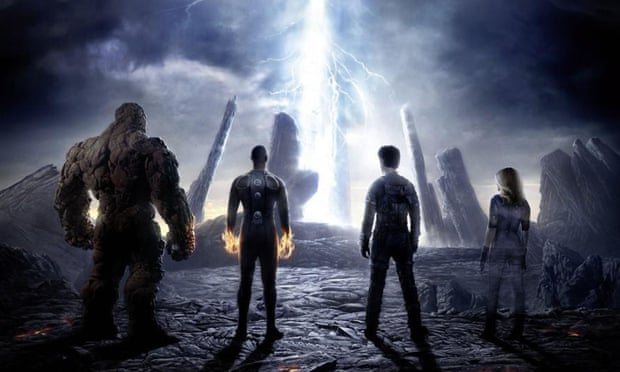
"Fantastic" this superhero reboot is not - Fantastic 4 Review

I wish I could believe director Josh Trank, best known for his over-the-shoulder supervillain case study “Chronicle,” intended his franchise reboot “Fantastic 4” to be a satire of studio micromanaging of artists. It contains the necessary ingredients: greedy military officials wanting control of the Baxter kids’ inventions and, later, their powers, baiting them with their much-needed funding.


Such a critique wouldn’t be out of place in the superhero film industry. Joss Whedon recently split from Marvel claiming a stifling of creative freedom, and the original director of “Ant Man,” Edgar Wright (“Shaun of the Dead” and “Hot Fuzz”), who worked on the film for nearly eight years, was replaced when the film began shooting due to creative differences with the studio. It’s indicative of a problematic tension between creators wanting to push the envelope, and the studios who rely on formula to ensure box office returns and sequels.

The same tension is evident in this rendition of Marvel’s first family, the story of four children who, through a freak accident of scientific mumbo jumbo, come into the possession of super abilities. It wants to be something unique, going so far as to delay any semblance of an action scene until nearly halfway through the film, instead spending time developing a number of potentially rewarding themes: environmentalism, scientific and personal ownership, and parent-child relationships. But then the tone shifts for the second act, and while it’s not as attentive as the first, it remains redeemable until the hasty and sloppily filmed third act
.
As such, the film doesn’t deserve the credit of being considered a carefully constructed and thoughtful satire. The unclear thematic threads and a complete lack of narrative integrity suggest something more akin to an identity crises, either between Trank and Fox Studios or within Trank himself.

Aside from a few instances of meaningless science babble (“his biochemistry is off the charts”) the film actually actually starts out pretty well. Pacing wise, it privileges a slow and intentional burn in lieu of something more explosive as seen in the Marvel films, allowing us ample time to explore the relationships and idiosyncrasies of the major characters. Dr. Storm (Reg E Cathey) struggles to urge his children (Johnny, played by Michael B. Jordan, and the adopted Sue, played by Kate Mara), Reed Richards (Miles Teller) and Victor Von Doom (Toby Kebbell) to collaborate for the sake of scientific progress. As they build a device that facilitates inter-dimensional travel, Reed and Sue exchange a number of appropriately awkward flirt scenes, Johnny provides sass and Victor gives the middle finger to any and all authority (literally and figuratively).

The dialogue, for the most part, is refreshingly crisp during this segment of the film. Doom comes off a little dry at first, and his more Machiavellian tendencies don’t shine like they need to in order to properly foreshadow his later detachment from humanity, but several rather thought provoking speeches and conversations establish a solid foundation of ideological tension and psychological motivation.

Sue Storm (Kate Mara) uses her powers to prevent theater goers from seeing this film 
Then tragedy strikes, causing the teens to acquire their powers, which make them seem more like monsters than superheroes at first, and properly so. Reed’s stretch powers come off as freakish as he snakes himself through a ventilation duct, Johnny's body uncontrollably erupts in flames, and Ben Grimm (Jamie Bell), Reed’s childhood friend, is a monster cocooned in rock, slowly freeing himself one limb at a time.
Things mature in this stretch, with the stakes heightened, but the pace increases so much that interpersonal tensions seem too quickly resolved and the themes previously established soon loose their grip.

With a final brilliant scene of slow, monstrous villainy, the last remnants of Trank’s competencies extinguish, giving way to a third act that completely disregards the established themes for a short, uninspired fight scene during which Reed makes a statement no longer than a tweet that resolves all conflicts among the characters and unites them against a villain attempting - you guessed it - world destruction. It’s quick and cheap.

It doesn’t even look good. While the Johnny's flame powers and Ben’s rocky bod look alright up close, the environment is so clearly green screened that it’s distracting. It looks like cheap rock in the foreground and a Bob Ross painting behind.

The tragedy of “Fantastic 4” is that, unlike other superhero nonstarters like Ryan Reynolds’ “Green Lantern,” it possessed such potential, as demonstrated by the first act. For whatever reason, though, it collapsed, leaving viewers unsatisfied and fans disappointed. This is not an acting issue - the cast did great considering what they were given. This is a writing issue, regardless of the source, and there’s no redeeming such a fundamental weakness.

Save your money and skip this one, folks. Stay home, watch ‘Chronicle” and weep for what could have been.

Thursday, August 6, 2015

Mission Impossible: Rogue Nation Review

This review was originally published in the Monroe News

Yet another summer sequel, “Mission Impossible: Rogue Nation” marks terrific Tom’s fifth venture in the iconic series. Under director Christopher McQuarrie, this globe-trotting installment tosses the 53 year old Cruise into ever more breath-taking (literally) set pieces strung loosely together by a flimsy Sherlock-Moriarty styled back and forth.  


The film begins with Cruise’s Ethan Hunt, the now legendary operative of the Impossible Mission Force, tracking down the mysterious (and not so cleverly named) Syndicate, an international terrorist organization made up of ex-superspies promoting war a destruction on a global scale, as villainous organizations are wont to do. However, some - chiefly the CIA agent Alan Hunley (Alec Baldwin) - accuse Hunt of fabricating the organization’s existence to justify his thrill-seeking hero complex. Citing the fallout from the film’s predecessor “Ghost Protocol,” Hunley succeeds in dismantling the IMF, forcing Hunt and friends to, once again, work as fugitives of their own government to dismantle yet another the global threat.


Several times the film dances around the idea of psychologically examining Hunt, a man who puts himself in ludicrous amount of danger, gamboling not just with lives, but with the security of nations, and relying on luck to win the day. But the superspy refuses to yield in his belief that the Syndicate’s leader, Lane (the creepily subdued Sean Harris) isn’t manipulating events from behind the scenes.


But we never question the infallible Hunt, and in order to validate his many high-octane set pieces, the focus quickly transitions to a more external tension between Hunt and Lane. The former obsessively attributes the world’s tragedies to the criminal genius, and the latter tolerates his potentially useful foe in classic bad-guy fashion. The relationship becomes a “I knew you knew I knew that you knew” kind of back and forth.


It’s familiar, but that’s okay. Lane’s megalomania serves for more than a few dramatic, high-tension scenes, especially when including the film’s leading lass, the cleverly named Ilsa Faust (Rebecca Ferguson), whose loyalties - while confusing - are less of a mystery and, again, more of an impetus for dramatic action.


Indeed, a cerebral thriller is not the mission you will accept when you choose to see this blockbuster. The Mission Impossible franchise is all about the crazy action, and “Rogue Nation” delivers. From high speed motorcycle chases filmed in extremely tight shots to maximize the sense of speed to infiltrations of underwater safes, “Rouge Nation” succeeds in moving butts to the edges of their seats. However, it’s the more combat oriented scenes that really steal the show. McQuarrie found a perfect balance of acrobatic speed and strategy to make Hunt seem like the most formidable guy in a  fight without breaching into the unrealistic or relying on choppy editing, a feat most obvious during a great set piece backstage of an ongoing opera.


But Hunt isn’t alone in stealing the show. Ilsa comes in at a close second, flipping around enemies like Marvel’s Scarlet Witch, though without unnecessary displays of cleavage. Appreciably, the film treats Ilsa less like a spy in a man’s world and more like a spy in a spy world. Of course she would slip off her heels when planning to get in a fight.


Beyond Ilsa and Simon Pegg’s Benji, who spends his time in equal parts on a laptop and providing a sarcastic vent amidst the crazy action, the rest of the supporting cast doesn’t get much to do until the film’s third act. Jeremy Renner plays a witty yet conflicted foil to Hunt’s obsession, and Baldwin is a serviceable CIA jerk, but it’s Pegg, with his name brand subtlety and timing, who grounds the film for the non superspy audience members.


Will you leave the theater ruminating upon the nature of men in power and those who devote themselves to stopping them? No - wait for the next Bond film for that (hopefully). Will you run out of the theater and try to slide over the hood of your car while audibly humming the classic Mission Impossible tune? I sure did. While not the smartest in the franchise, “Rogue Nation” provides a more than serviceable action blockbuster experience.

Thursday, July 23, 2015

Ant-Man Review


*Article originally published in the Monroe News*
 
In 2011, we asked how a Norse god of thunder could fit in with a science experiment and a man in a metal suit. In 2014, we wondered again about the wisdom of adding a talking raccoon and a walking tree to the mix. Both turned out rather spectacularly, yet audiences still furrowed their brows at Marvel’s newest title about a guy who can get really tiny and talk to insects.

The 12th - yes, 12th - installment of the juggernaut that is the Marvel cinematic universe and the end of Marvel’s “Phase 2,” director Peyton Reed’s Ant-Man was an unexpected but inspired choice, words that define the casting and some inventive action scenes. However, even this minuscule hero can’t escape the confines of a formula that’s proven itself effective time-and-again.

The film follows Scott Lang, played by Paul Rudd, a mechanical engineer / free-running burglar fresh out of prison and just trying get a job and make his daughter proud. He declares a desire to stop breaking into places and stealing stuff. Then, after some failed attempts at regular employment, physicist Hank Pym (Michael Douglas) recruits Lang to break into a place a steal some stuff. That place is Pym’s old company, Pym Tech, and the stuff is the ‘Pym particle,’ a dangerous nuclear innovation that allows for the shrinking powers of the Ant-Man suit, but is - of course - capable of causing world-altering destruction. Pym’s protege Darren Cross forced Pym out of the company and plans to make a profit by selling the Pym Particle to the typical baddies. So, along with Hope Pym, Hank’s martial artist daughter played by Evangeline Lilly, the band prepares for a heist of Pym Tech.

In the same vein that Captain America: Winter Soldier crossed genres as a spy thriller in superhero spandex, so too is this film a superhero twist on the classic heist film throughout its first two acts. We see the recruitment phase, the planning phase (which doubles as the essential training montage of any superhero origin story), and the eventual heist, complete with a water-pipe entry, guard swaps, and laser grids. Sadly, though, the heist plot devolves into a Marvel-typical and rather hasty bang-boom-zap-whap fest for the last half of the third act.

Up until that flashy third act, the film spends much of its time on character and relationships. We sympathize with Lang’s desire to become the hero his daughter already sees him as while struggling just to get a job and pay child support. By the same token, Pym and Hope have to navigate the lingering scars of Pym’s distance after the death of Hope’s mom. Even Cross’ megalomania is due in part to a sense of daddy-abandonment, communicated by a mix of respectful indulgence and self-absorbed triumph. But with the inclusion of the unmemorable brawl at the end, few of these character dynamics, with the exception of Pym and Hope’s daddy-daughter issues, get a chance to really land.
 
There’s actually a scene in the film when Pym catches Lang finicking with the mechanics of the Ant-Man suit, which he warns him against because the small device in question is what keeps the wearer from going “subatomic” when shrinking, drifting into the quantum realm where the rules of time and space no longer apply. And Lang, in Rudd’s perfect timing, replies “Well, if it ain’t broke.”

That pretty much sums up the film’s deference to the established Marvel movie structure. You want to see Rudd change it up, and it looks like he might with a voiced aversion to violence early in the film and his grounded origin not as super soldier, space pirate, or genius playboy philanthropist, but as a struggling father with money issues and a tendency to fall back into undesirable habits when life gets hard. But, in the end, there’s the wise old voice of consumerism warning the film away from tweaking with the formula and falling into a land  low box office revenue.
 
Visually, Ant-Man is one of Marvel’s most innovative films to date thanks to the the Ant-Man shrinking mechanics. When Lang first tries on the suit, he finds himself on shrunken odyssey through his apartment building during which he was caught up in tidal waves of bath water, dodged the dancing feet of raving teenagers, fled a roaring mouse the relative size of an elephant, and was sucked into a vacuum cleaner. Later fight scenes including a bout in a brief case which spills into a child’s toy-laden bedroom further the Toy Story inspired technique of changing up the typical action paradigm with new views on the mundane, like iPhones and a Thomas the Train set.

 
And while perhaps seemingly inconsequential next to lighting wielding demigods, the use of ants in the film is actually pretty cool. Lang learns to communicate with and control four different ant species, all with their own specific talents, which are put to use in subtly creative ways throughout the film, including a providing winged mounts, covering camera lenses, and forming improvised life-rafts, bridges, and ladders.
 
As far as acting, Rudd is a team player, adding his name brand dry and awkward sarcasm to scenes, but generally serving in a reactionary role rather than drawing attention to himself. Douglas’ Pym, on the other hand, steals every scene he’s in, whether with a witty remark and a tearful admission. Lilly plays Hope as a hardened and determined female lead, balancing cold condescension with enough vulnerability to make the relationship conflicts that ground the film work. Corey Stoll tries so hard to make his Darren Cross equal parts spurred child and insane megalomaniac, but the writing never lets us care too much, and by the time Cross dons the Yellowjacket, he becomes little more than a video game villain frustratedly ranting at Lane. Lane’s culturally diverse gang of fellow thieves serves to provide some three-stoogy comedic relief, especially Michael Pena’s he-said-she-said scenes. But the real show-stealer in this film is Lane’s daughter, the adorable Abby Ryder Fortson, who utters innocent, awe-inducing one-liners through the gap where her two front teeth should be.

Ultimately, the film will convince audiences that Ant-Man is, in fact, cool. Heck, it will convince them that ants are cool! Novel visuals and fight scenes owing to Ant-Man’s powers mix up the traditional action movie pallet, though the attention to characters makes it okay when the people just talk to each other. In the end, this is a Marvel film, with all the humor and action associated with the name, though in this case, especially, the explosive third act is a betrayal of the better superhero-heist film this could have been.